


IELTS time management plays a pivotal role in determining your overall performance on exam day. With the test spanning approximately 2 hours and 40 minutes for the listening, reading, and writing sections—conducted consecutively without breaks—every second counts.
According to recent statistics, around 60% of test-takers struggle with completing all questions in the reading section due to poor time allocation. This highlights the importance of strategic planning to maximize your score.
Studies show that candidates who simulate full mock tests improve their pacing by up to 20-30%.
Ready to refine your IELTS writing? Try our free AI-powered essay checker tool now for instant feedback!
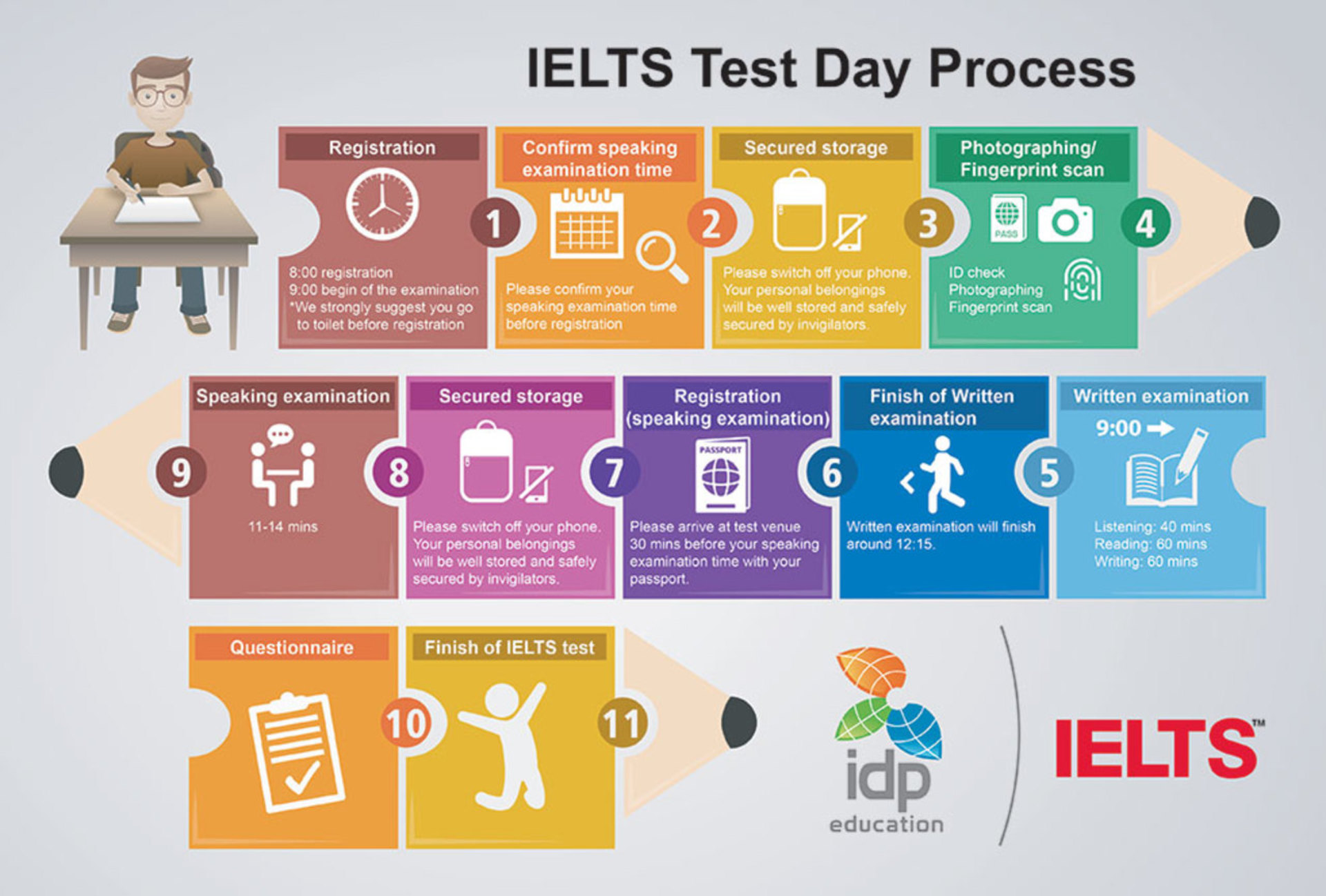
What to expect on IELTS test day | Source: IDP IELTS
Preparing Effectively Before Exam Day
Preparation is the foundation of successful IELTS time management. Starting early allows you to build endurance and familiarity with the test format, reducing anxiety on the day.
- Schedule Mock Tests Regularly: Dedicate time each week to full-length practice exams under strict timing. For instance, simulate the 60-minute reading section by setting a timer and working in a quiet environment. This not only improves speed but also helps identify weak areas. Research indicates that consistent practice can boost overall band scores by 0.5 to 1 point.
- Gather Essential Items in Advance: Pack your ID, pencils, pens, eraser, and a clear water bottle the night before. Avoid last-minute rushes that could spike stress levels. Example: A test-taker from India shared that forgetting their eraser led to unnecessary distractions during the writing task.
- Sleep and Nutrition Focus: Aim for 7-9 hours of sleep and a balanced breakfast. Dehydration or fatigue can impair concentration, affecting your ability to manage time effectively.
By focusing on these steps, you’ll enter the test center with a clear mind, ready to allocate time wisely across sections.
Arriving Early and Staying Calm at the Test Center
Arriving early sets a positive tone for IELTS time management. It gives you buffer time to settle in and mentally prepare, minimizing external stressors.
- Timing Your Arrival: Reach the venue at least 30-45 minutes before registration. This allows for security checks and seating without haste. Statistics from IELTS centers show that late arrivals often score lower due to heightened anxiety.
- Comfort and Adaptability: Wear layered clothing to adjust to room temperatures. Request a toilet break only if essential, as it deducts from your test time. For example, during a hot summer test in Southeast Asia, a candidate used breaks wisely to stay hydrated without disrupting flow.
- Breathing Techniques for Calmness: If pressure builds, practice deep breathing—inhale for 4 seconds, hold for 4, exhale for 4. This simple method can restore focus quickly.
These habits ensure you’re physically and mentally primed, allowing better control over the exam’s pace.

IELTS Tips: Simple Strategies to Get a Higher Score | Source: Essay Pro
Optimizing Time in the Listening Section
The listening section, lasting 30 minutes plus 10 minutes for transfer (paper-based), demands sharp focus and quick note-taking. Effective IELTS time management here prevents missing sequential answers.
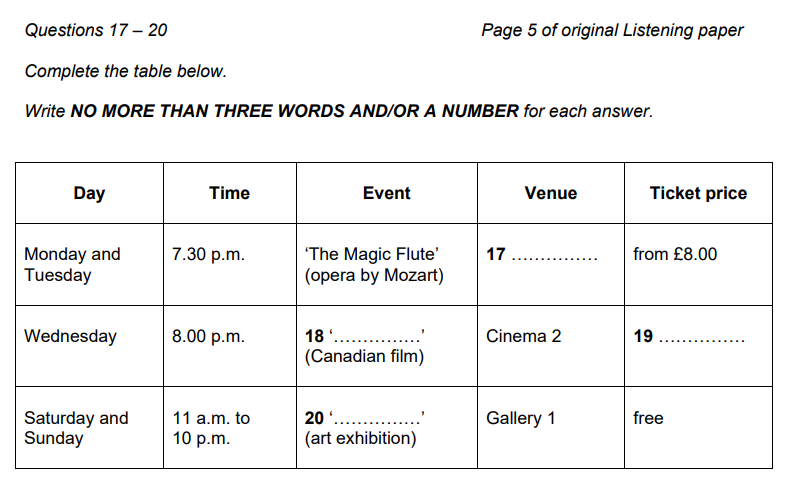
Original IELTS Exam Listening Paper | Source: IELTS IDP
- Preview Questions Thoroughly: Use the initial time to skim all questions, underlining keywords like dates or names. Predict possible answers—for instance, if a question asks for a location, anticipate hearing addresses or directions.
- Handling Missed Answers: Don’t dwell on uncertainties; move on since answers follow the recording order. During transfer time, guess intelligently and check spelling. A common example: Misspelling “accommodation” as “accomodation” costs points, so capitalize all answers for clarity.
- Computer vs. Paper Differences: In computer-based tests, input as you listen and use the 2-minute review for edits. Test headphones early to avoid technical delays.
Insights reveal that candidates who preview effectively complete 80-90% of questions accurately, underscoring the value of this strategy.
Strategizing for the Reading Section
With 60 minutes for three passages, IELTS time management in reading involves allocation and scanning techniques to cover 40 questions efficiently.
- Time Allocation Breakdown: Spend 15-17 minutes on Passage 1, 20 on Passage 2, and 20-23 on Passage 3. Check the clock every 10-15 minutes. For example, if stuck on a true/false question, skip and return.
- Skimming and Scanning Methods: Quickly skim for main ideas, then scan for keyword matches or paraphrases. Avoid deep reading—focus on location. A test-taker anecdote: Prioritizing easier questions first secured 25/40 marks despite time constraints.
- Answer Transfer Tips: Write directly on the sheet; ensure spelling accuracy and adhere to word limits. Using capitals prevents legibility issues.
Data shows that poor time management leads to unfinished sections for over half of examinees, impacting band scores significantly.
Get instant IELTS writing feedback—use our free AI essay checker tool today!
Mastering Time Allocation in the Writing Section
The 60-minute writing section requires strict division: 20 minutes for Task 1 (150+ words) and 40 for Task 2 (250+ words), as the latter weighs more in scoring.
- Planning Phase Importance: Dedicate 2-5 minutes to outline. For Academic Task 1, include an overview; for General, address all bullets. Example: In a graph description, note trends before writing to avoid mid-sentence revisions.
- Word Count Management: Estimate words rather than count meticulously—aim slightly above minimums. Reserve 2-3 minutes for proofreading grammar and coherence.
- Consistency and Requests: Maintain one spelling style (British/American). Raise your hand for extra paper if needed, without wasting time.
Expert tips emphasize that structured planning can elevate Task 2 responses from band 6 to 7, as it ensures balanced arguments.
Enhancing Performance in the Speaking Section
Lasting 11-14 minutes, the speaking section tests fluency under time pressure. IELTS time management here focuses on preparation and natural delivery.
- Part-Specific Strategies: In Part 1, give expanded short answers (25-35 seconds). For Part 2, use the 1-minute prep to jot points, then elaborate for 1-2 minutes with examples—like describing a memorable trip with details on why it was special.
- Extended Responses in Part 3: Aim for 1-minute answers with opinions and vocabulary. Speak steadily; use fillers like “Well, in my view” to avoid pauses.
- General Tips: Maintain eye contact and listen attentively. If unclear, ask politely to repeat. Fluency trumps perfection—practice with timers to build rhythm.
Success stories indicate that timed practice boosts confidence, leading to higher bands in this interpersonal section.
Building Long-Term Habits for IELTS Success
Consistent habits post-preparation reinforce IELTS time management, turning strategies into instincts for future endeavors.
- Review and Iterate: After mocks, analyze time spent per section. Adjust based on patterns—for instance, if reading takes too long, practice more scanning drills.
- Incorporate Feedback Loops: Use tools or tutors to review timed writings. Statistics from IELTS prep sites show iterative practice improves efficiency by 25%.
These habits ensure sustained improvement, applicable beyond the exam.
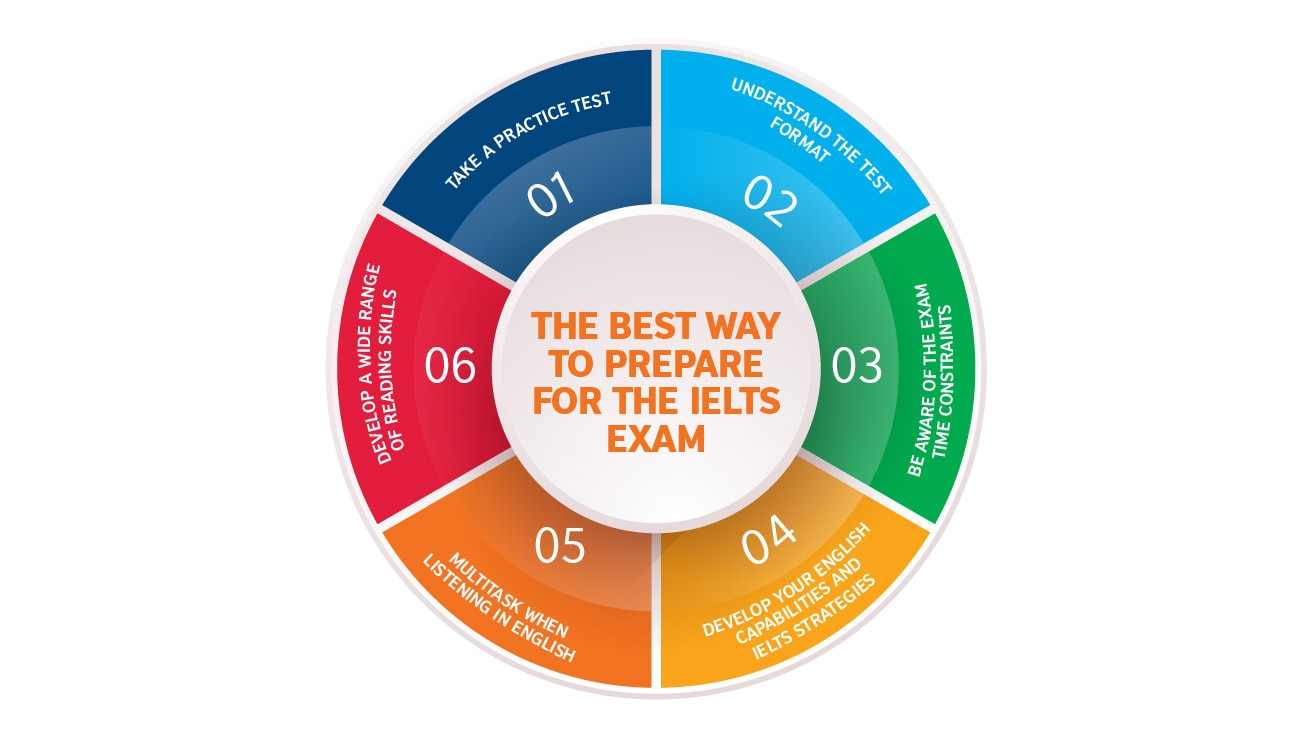
The best way to prepare for the IELTS exam | Source: British Council Foundation
Conclusion
Mastering IELTS time management on exam day is essential for unlocking your full potential and achieving desired band scores. By preparing diligently, allocating time wisely across sections, and staying composed, you can navigate the test with confidence. Remember, over 3 million people take the IELTS annually, and those who prioritize pacing often see the best outcomes. Implement these tips, practice consistently, and watch your performance soar.
For quick IELTS essay checks, leverage our free IELTS writing checker!
FAQs
Q: How much time should I allocate to each reading passage? A: Aim for 15-17 minutes on Passage 1, 20 on Passage 2, and 20-23 on Passage 3 to balance difficulty and ensure completion.
Q: What if I miss an answer in listening? A: Move on immediately—answers are sequential. Use transfer time to guess and check.
Q: Is there a break between sections? A: No, listening, reading, and writing are consecutive. Prepare for endurance with mocks.
Q: How can I practice speaking timing at home? A: Record responses with a timer, aiming for specified lengths per part, and review for fluency.
Q: Does computer-based IELTS affect time management? A: Slightly—direct input saves transfer time, but practice the interface to avoid delays.